
Care more between visits — and finally get paid for it.
SaRA helps PT, OT, Ortho, and Pain practices engage patients between appointments through simple SMS — improving outcomes, increasing POC completion rates, and unlocking meaningful reimbursement.
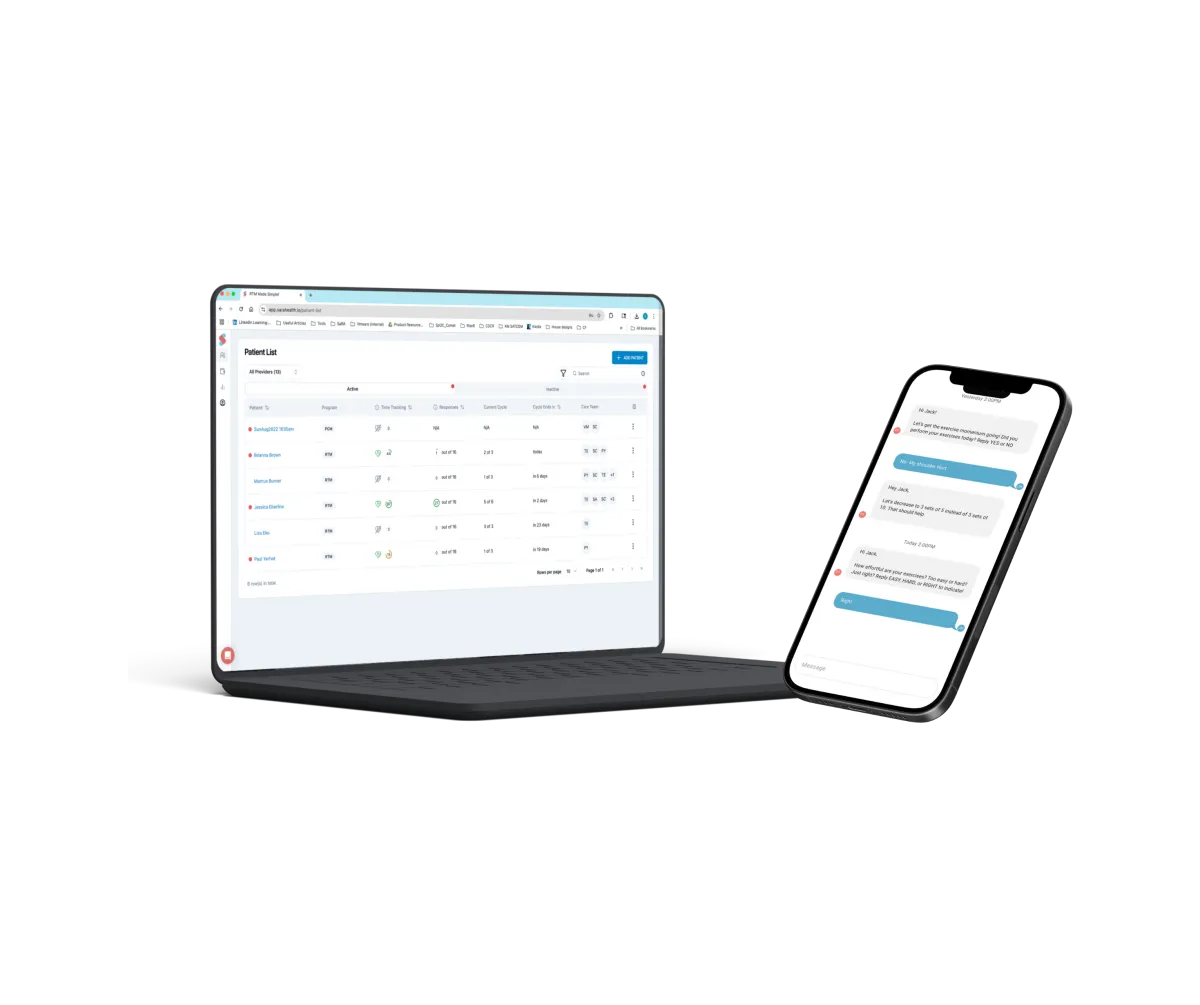
The SaRA Way

Identify the Right Patients
SaRA automatically finds RTM-eligible patients inside your EMR. Enrollment takes seconds

Engage Between Visits
Patients receive personalized SMS check-ins based on injury and care plan.
No app. No workflow disruption.

Capture & Reimburse the Care
We bill the codes for you (and fight denials, etc.)!
The SaRA Way is embodied in our Effector Model, where we effect the hardest parts of RTM, and only benefit if you do.
Value for Clinic Owners, Clinicians & Patients

Streamline Patient Communication
Patient responses flow into a singular portal resulting in fewer phone calls, emails, and text messages.

Increase Revenue
SaRA automates patient engagement. With a 65% average engagement rate you can reliably meet the engagement requirements for remote care.

Improve Patient Experience
Help patients increase their adherence and increase their knowledge of their own health journey by asking them to engage with SaRA (as simple as texting back and forth) daily,
What is Remote Therapeutic Monitoring (RTM)?
High Level
CPT Codes that pay for patients engaging with Technology (specifically a Software as a Medical Device, or SaMD) and/or Clinicians outside of other billable codes. Now, what are the codes? Below are the Musculoskeletal specific codes although Respiratory and Coginitive Behavioral Therapy has their own RTM codes as well.
Connect: 98975
98975: Initial set-up with monitoring device (hardware or software) and patient education
Engage: 98985 and 98977
98985: A patient who has engaged in remote monitoring of the Musculoskeletal system for 2-15 days (in a 30 day period) via a Software as a Medical Device
98977: A patient who has engaged in remote monitoring of the Musculoskeletal system for 16-30 days (in a 30 day period) via a Software as a Medical Device
Support: 98979-98981
98979: 10-19 minutes of a physician or qualified provider interaction with patient data and communication with patient on their status
98980: 20-39 minutes of a physician or qualified provider interaction with patient data and communication with patient on their status
98981: Each additional 20 minutes of a physician or qualified provider interaction with patient data and communication with patient on their status after 98980

Simpler Through Integrations
Our customers have simplified their workflow through integrations with various browser-based Electronic Medical Record Systems.
Who’s Paying for RTM?
Our customers have been reimbursed by Medicare and a variety of commercial insurances, including United, BCBS, and Aetna.
SaRA Health has signed the APTA Digital Transparency pledge, affirming that all digital "physical therapy" services are provided or directed by licensed physical therapists in line with regulations and APTA standards.
ORCHA rated the SaRA Health platform an impressive 84%. We're proud that our commitment to provider satisfaction and patient safety is reflected in this high score.
Hear From Leaders Like You
